October 08, 2026



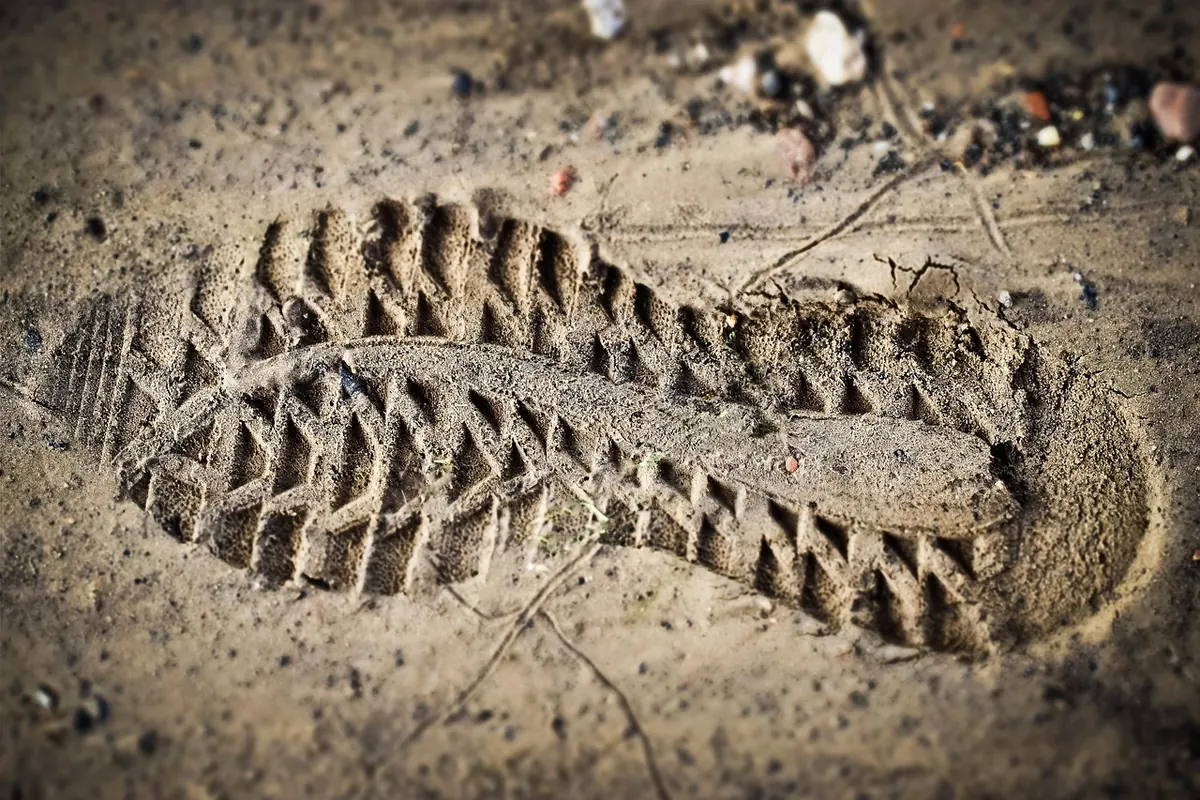
The mud along the creek was still dark and wet when I found them: four neat ovals in a diagonal line, claw tips pressed in like commas. A coyote, trotting upslope and gone. I never saw the animal. The ground saw it for me.
That is the quiet appeal of tracking. You learn what's nearby without asking anything of it — no calls, no bait, no chase. All you need is ground that holds a shape and the patience to slow down.
You don't have to name every print to a species. If you can tell a dog from a cat, a walk from a bound, and fresh from old, you're reading more of the landscape than most people ever do.
Every surface lies a little. Mud, snow, and sand each record differently, and knowing their habits keeps you from bad identifications.
Four toes, a triangular heel pad, and claws that usually show as small points ahead of the toes. Coyote, fox, wolf, or the neighbor's Labrador — the family resemblance is strong. Because canids trot so efficiently, the prints often run in a nearly straight line, with the hind foot landing in or close to the front track.
Four toes, a rounder and more compact print, and no claw marks. Cats retract their claws, so unless the ground is slick or the animal was moving fast, the toes sit clean on the surface. Bobcat and housecat tracks are easy to confuse, and a cougar's print is roughly the size of your palm — but resist the urge to turn every big track into something dramatic.
Deer, elk, moose, and pronghorn leave two pointed teardrops that meet at the front and splay wider in soft ground. When the animal runs, look for two small dots behind the main print: the dewclaws, which only touch down at speed. A wide splay usually means soft going, not a giant animal.
Rabbits and hares land with their hind feet ahead of their front feet, leaving two long ovals behind two small rounds. Rodents such as squirrels show four toes on the front foot and five on the hind, often scattered star-like where they hopped. Most birds leave three toes forward and one back, though woodpeckers and owls leave two and two.
A single print is a fact. A line of them is a story, so step back and read the sequence.
Walk. Four separate prints, with the hind foot landing close to the front one. Deer and cats walk far more than they run, and a walking deer often places its hind foot directly into the front track — two prints where four feet passed.
Trot. A two-beat diagonal gait. Coyotes, foxes, and dogs can trot for miles, and they frequently register the hind foot exactly in the front print, leaving one long, tidy line. Evenly spaced prints with little deviation are usually a canid going somewhere with intent.
Bound. The body compresses and stretches, hind feet landing together ahead of the front feet. Rabbits and squirrels bound. Weasels bound in snow, leaving paired dots that leapfrog down the trail like a stitched seam.
Gallop. All four feet leave the ground at once and the hind prints land ahead of the front. Cats do it in short bursts; deer do it when they're alarmed. A fresh gallop trail in snow means something spooked that animal, and you may be part of the reason.
Snow keeps the entire event, not just the feet. Look for the pauses: a cluster of prints where the animal stopped, a smear where it sat, a hollow under a low branch where it sheltered. Snow beds — oval depressions melted by body heat — mark where a deer or hare spent the night. You may find where a bird landed and pushed off, sometimes with a faint print of its wings, or where a fox pounced, front feet together and nose-first hole in the snow.
Snow also ages visibly. Fresh prints have soft, crumbly edges and loose snow inside. Day-old prints hold sharper rims. Older tracks round over and fill in. A light dusting overnight draws a clean line between yesterday and today: snow inside a print means the print is older than the snowfall.
Tracks are one entry in a longer list, and other sign often says more about what an animal was doing.
The point of all this is awareness, not pursuit. If you're following a fresh predator track into thick cover, or you're in bear or cougar country with limited visibility, turn around. Don't follow tracks toward a den, a bed, or a kill, and don't let a dog run a fresh scent line. In winter, an animal that burns energy running from you may pay for it later.
Rules vary by place, so check local regulations before heading off-trail — some public lands and refuges restrict winter access or off-trail travel, and private land needs permission. In bear country, your state or provincial wildlife agency publishes current guidance for that region, and it's worth reading before you go.
Then head back out after the next rain or snowfall. Same trail, new page.
Photo: 652234 / Pixabay
A guiding light for outdoor adventures..
Copyright © 2026 Briar Beacon. All rights reserved. Briar Beacon.