
November 28, 2026


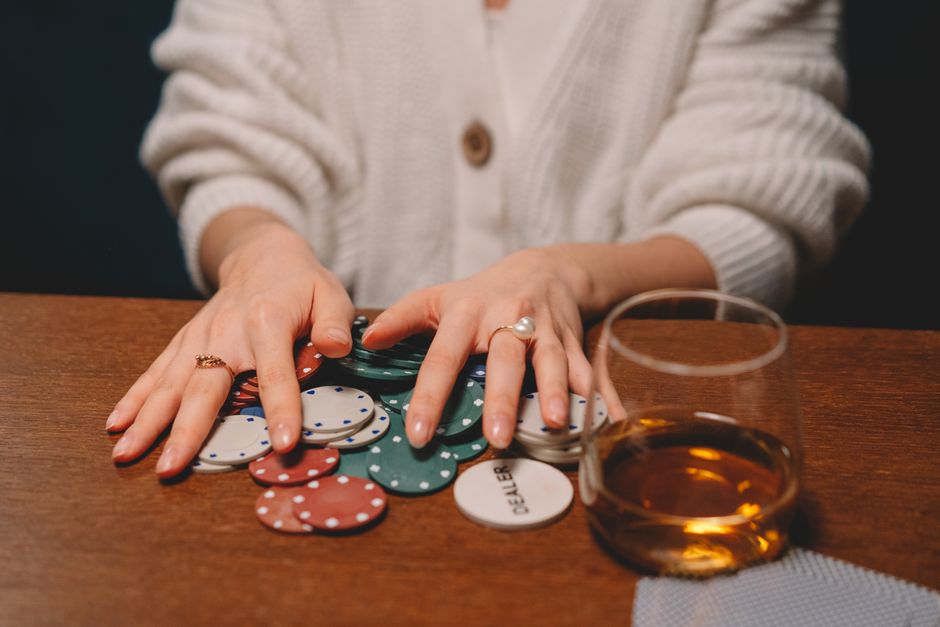

You’re three hours into a poker session. The guy to your left hasn’t played a hand in forty minutes, then suddenly shoves all-in on a 7-2 offsuit. You fold. He flips over pocket aces. Was that luck, or did the algorithm just decide it was his turn to win? If you’ve ever muttered “this site is rigged” after a bad beat, you’re not alone. But here’s the thing: most players misunderstand what’s actually happening under the hood. Let’s cut through the noise and look at the mechanics that really drive iGaming—from slot volatility to poker rake to the math that keeps casinos in business.
Every spin on a modern slot machine—whether it’s a physical reel in Vegas or a digital slot on your phone—is driven by a Random Number Generator. The RNG is a piece of software that cycles through thousands of numbers per second. When you hit “spin,” it grabs the current number and maps it to a result. The key word here is pseudo-random. True randomness is nearly impossible to achieve with a deterministic machine, so RNGs use complex mathematical formulas and a seed value (often based on the millisecond you pressed the button) to produce a sequence that passes statistical randomness tests.
Why does this matter? Because the outcome of your next spin is independent of every spin before it. That “cold” machine that hasn’t paid out in an hour? It has no memory. The odds are exactly the same as the machine next to it that just hit a jackpot. Gambler’s fallacy—the belief that a win is “due”—is the quickest way to lose your bankroll. The RNG doesn’t care about your feelings or your last ten losses.
But here’s a concrete tip: reputable online casinos publish their RNG certificates from independent auditors like eCOGRA or iTech Labs. If a site doesn’t show that badge, close the tab. You’re not playing a regulated game; you’re donating to a mystery box.
Every casino game has a built-in advantage for the house. This isn’t a scam—it’s the business model. The house edge is the mathematical difference between the true odds of an outcome and the payout you receive. For example, European roulette has a single zero. True odds of hitting a single number are 1 in 37, but the payout is 35 to 1. That 2.7% gap is the house edge. Over thousands of spins, the casino extracts that percentage from the total money wagered.
Slots work differently. Instead of a fixed house edge per bet, they have a Return to Player (RTP) percentage. A slot with 96% RTP returns, on average, 96 cents for every dollar wagered over millions of spins. The remaining 4% is the house edge. But—and this is crucial—RTP is a long-term average. In a single session, you could hit a 1000x multiplier and walk away way ahead, or you could lose 50% of your bankroll in twenty minutes. The RTP doesn’t guarantee you’ll get 96% back in a given night; it just describes the machine’s programming over an infinite timeline.
Concrete example: Two slots, both with 96% RTP. Slot A has low volatility—frequent small wins. Slot B has high volatility—rare but massive wins. Your $100 bankroll might last two hours on Slot A, but on Slot B you could lose it in five minutes or turn it into $5,000. Neither is “better.” They just suit different risk appetites. Knowing your own tolerance is more important than chasing a higher RTP. If you want to dig deeper, 789Win is worth a look.
Poker is often called a skill game, but even the best players pay a tax. That tax is the rake—a commission taken from each pot. In live casinos, the rake is usually 5% up to a cap of $5 or $10. Online, it’s often 5% with no cap at micro-stakes, or 2.5% to 4% with a cap at higher stakes. It sounds small, but it’s brutal.
Consider a $1/$2 no-limit hold’em game. If the average pot is $40 and the rake is 5% capped at $3, that’s $3 gone from every pot. Over 100 hands per hour, that’s $300 per hour leaving the table. The players collectively must win that back just to break even. This is why winning poker players are so aggressive about game selection—they need soft opponents to overcome the rake. A 5% rake might mean you need a 10% edge on your opponents just to show a profit.
Here’s a practical tip: track your win rate in big blinds per 100 hands (bb/100). If you’re beating a game for 2 bb/100 but the rake is effectively 3 bb/100, you’re actually a losing player. Many online sites offer “rakeback” deals—a percentage of the rake returned to you, often 20% to 50%. If you’re grinding mid-stakes, negotiating a rakeback deal is non-negotiable. Without it, you’re fighting an uphill battle.
Let’s talk about slot volatility in plain terms. Low volatility slots are like playing the penny slots—you get frequent, small wins that keep you entertained. High volatility slots are like buying lottery tickets—most spins are dead, but one spin can change your night. The difference isn’t just psychological; it’s mathematical.
Why does this matter? Because your bankroll management depends on it. If you have $100 and play a high-volatility slot with a $1 bet, you might get 100 spins. But if the hit frequency is 15%, you could easily go 50 spins without a single win. That’s $50 gone before you see any return. On a low-volatility slot, you might win $0.50 every three spins, stretching your playtime to 300 spins or more. Neither is wrong, but you need to match the slot to your budget.
Also, ignore the “hot” and “cold” labels casinos sometimes slap on machines. Volatility is a fixed property of the game’s math model. A slot doesn’t become “hot” because it hasn’t paid out—it just hasn’t hit its rare big win yet. The reels are just as likely to pay on the next spin as they were on the last.
You can’t control the cards, the RNG, or the rake. But you can control how much you risk. Bankroll management is boring, unsexy, and the single most important factor in whether you’re still playing next month. Here’s a simple framework that works for slots, poker, and sports betting alike: It is also worth checking 789 Win before deciding.
One more thing: take breaks. Tilt—the emotional rage after a bad beat—is the number one bankroll killer. If you feel your heart racing after a loss, walk away for 20 minutes. The game will still be there.
After years of watching players chase losses, blame algorithms, and swear off a site because of a bad run, one truth stands out: the house edge is patient. It doesn’t need to win every hand or every spin. It just needs you to keep playing. That’s not cynicism—it’s the reality of an entertainment product with a built-in cost. The smartest players aren’t the ones who win the most; they’re the ones who understand the cost, set strict limits, and treat the whole thing as paid entertainment, not a retirement plan. So next time you fire up a slot or sit at a poker table, ask yourself: am I playing for fun, or am I trying to beat math? One of those is a lot more expensive than the other.

A guiding light for outdoor adventures..
Copyright © 2026 Briar Beacon. All rights reserved. Briar Beacon.