November 28, 2026




Ask ten slot players what RTP means and you'll get ten variations of "the percentage you get back." Technically true. Practically misleading. A 96% RTP machine does not hand you $96 for every $100 you feed it, and anyone who has burned through a bankroll on a "high RTP" game knows that feeling all too well. What RTP actually describes is the theoretical return over millions of spins, calculated by the game's math model before a single real player touches it. The gap between that number and your personal experience is where discipline, bankroll management, and a bit of cold arithmetic live.
Picture a slot with a 96% RTP and high volatility. Over 10 million spins, the payout curve flattens almost perfectly to 96 cents returned per dollar wagered. Over 200 spins, your personal return could be 40% or 180% — and both outcomes are completely normal within the math. This is variance, and it's the single most misunderstood force in casino gaming.
A concrete example: Book of Dead and similar high-volatility slots sit around 94-96% RTP but regularly produce sessions where a player loses 200 spins straight before a 500x bonus lands. A low-volatility slot like Blood Suckers (98% RTP by default) pays small amounts frequently and rarely destroys a bankroll in one sitting. Same RTP bracket, radically different experiences. When comparing games, always look at volatility alongside RTP — the two numbers tell the real story. SHBET covers this in more detail.
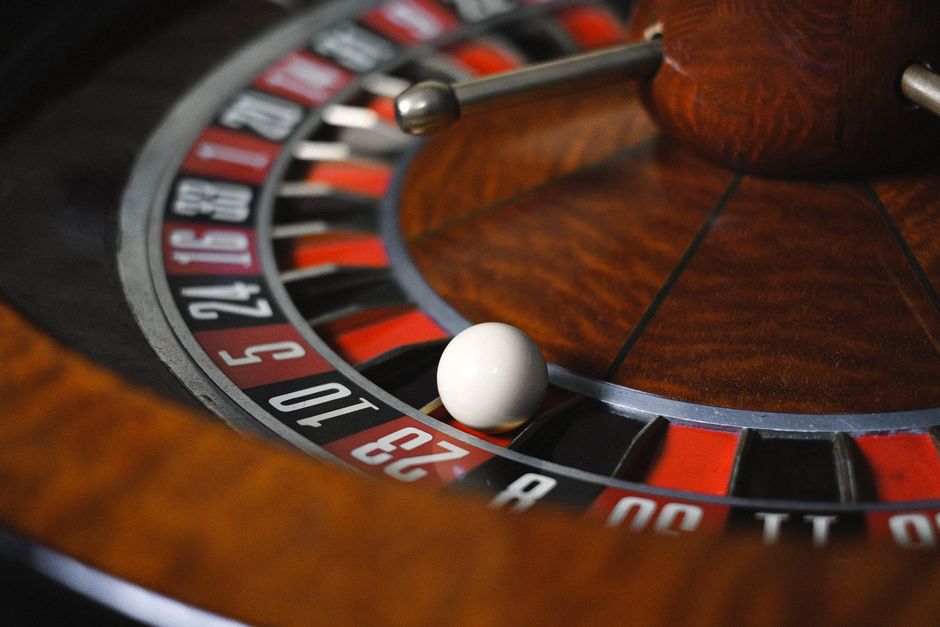
Every game in a casino is built on a mathematical edge. Blackjack with basic strategy trims the house edge to roughly 0.5%. European roulette sits at 2.7% thanks to the single zero. American roulette nearly doubles that at 5.26%. Slots vary wildly from 2% to 10% depending on the game and jurisdiction. Poker is the outlier — against other players, the house only takes a rake, so a skilled player can genuinely be profitable long-term.
Here's the math nobody wants to do: at a 4% house edge and 500 spins per hour on a $1 bet, your expected loss is $20 per hour. Play for five hours and that's $100 — statistically, not dramatically. This isn't a reason to avoid playing; it's a reason to understand that entertainment cost and to never chase losses expecting the math to flip. The edge doesn't care about your feelings or your heater.
If you've ever wondered why a coin-flip market like a basketball game is priced at -110 on both sides, that's the vig. A true 50/50 event should pay even money. At -110, you risk $110 to win $100, which means the bookmaker keeps roughly 4.5% of all money wagered on that market regardless of the outcome. Sharp bettors hunt for soft lines where the implied probability adds up to less than 100%, but for most recreational players the margin is simply the cost of action.
Two practical habits separate bettors who survive the season from those who reload in November: There is a useful overview at SH BET.
Poker's rake — typically 5% capped at $3-$5 in live cash games, or a small tournament fee — is a cost, not a wall. A player who consistently makes better decisions than opponents can overcome the rake and show profit over thousands of hands. That's not true in slots or roulette. The distinction matters because poker strategy is learnable: position, pot odds, range construction, and bankroll discipline (typically 20-30 buy-ins for cash games, 50-100 for tournaments) are skills, not luck.
The most common leak in low-stakes poker isn't bad math — it's playing too many hands out of boredom. A tight-aggressive player folding 75% of starting hands preflop will crush a loose player who plays 50% of hands, regardless of how good either is postflop.
Your bankroll should be money you can genuinely afford to lose, split into units sized to survive variance. A common framework for slots: 200-300 bets per session for high-volatility games, 100-150 for low-volatility. For sports betting, flat 1-2% of bankroll per wager is a standard sharp approach. For poker, 30 buy-ins minimum. These aren't arbitrary — they're sized so that a normal downswing doesn't end your entertainment.
Equally important: set session and loss limits before you start, not after you're down 40%. Almost every regulated casino now offers tools — deposit limits, cool-off periods, self-exclusion — and using them proactively is what separates recreational players from people who gamble badly. The math is fixed; your exposure to it is entirely under your control.
Understanding RTP, house edge, and variance won't turn a losing game into a winning one. What it will do is strip away the illusion that "it's due" or that a hot streak means anything about the next spin. The games are designed to be entertaining and mathematically profitable for the operator. Knowing that lets you walk in with real numbers, realistic expectations, and the discipline to walk out with your bankroll and your head intact. That's the only edge the house can't sell you.

A guiding light for outdoor adventures..
Copyright © 2026 Briar Beacon. All rights reserved. Briar Beacon.